

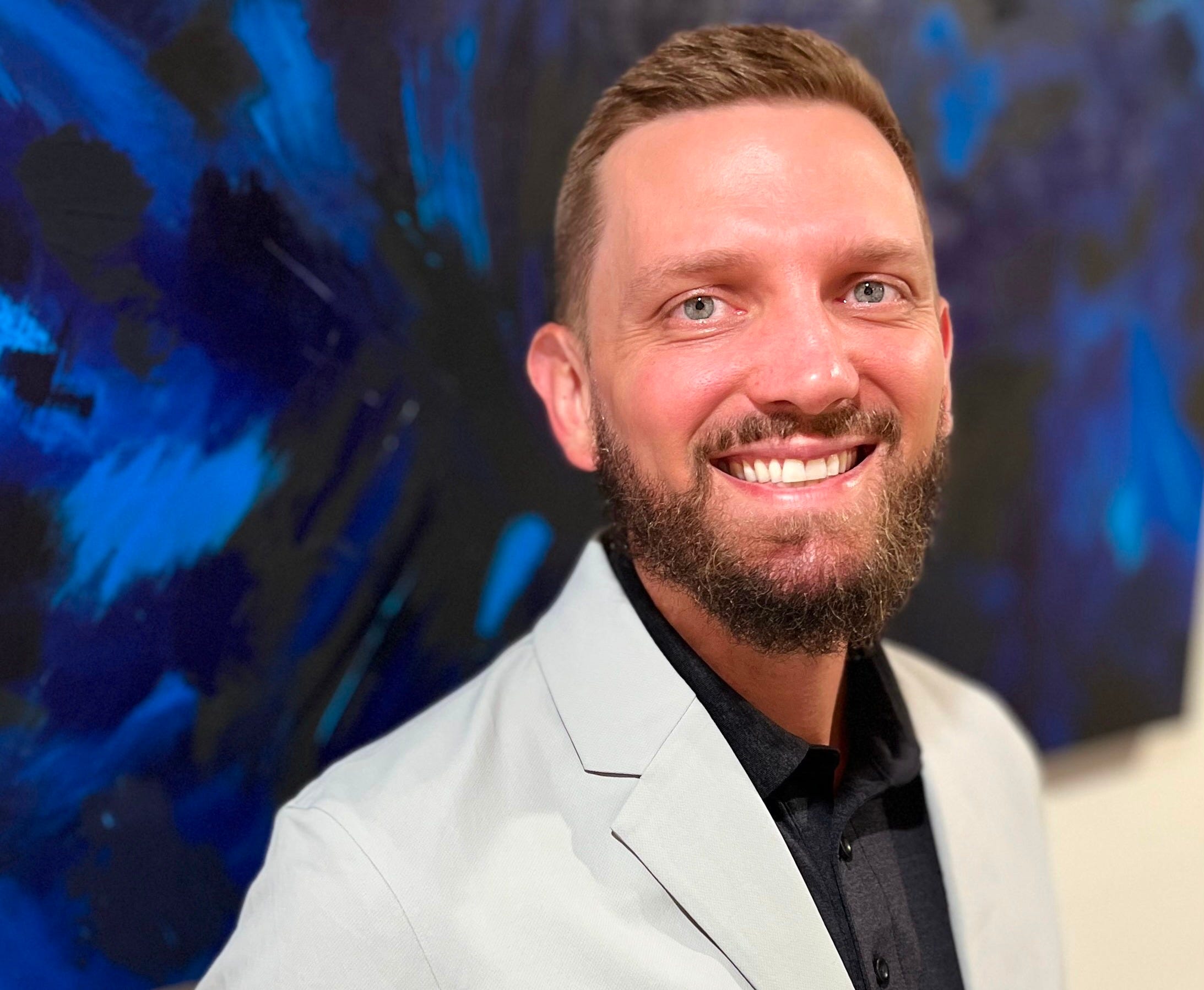
A Conversation with Brent Daily, Founder of Balanced Advisory
From entrepreneur to Big Consulting to entrepreneur again... lessons from walking away from certainty, loosening the grip of status, and building something that feels purposeful and real

I didn’t know Brent long before this interview, but it became clear early on that his path carries a familiar tension many never fully resolve. That is… the pull between career safety and entrepreneurship, between prestige and purpose, and between being “on” and being free.
His story stretches from small-town Indiana to Dallas, from working inside his father’s businesses to running his own, from an ambitious kid mowing lawns and launching a painting business in college to a young operator scaling a sign-manufacturing business across multiple states. Then came the pivot that many mistake for “arrival”… consulting, big corporate logos, rapid career advancement, and the external validation that comes with becoming the youngest director in a fast-growing consulting firm.
But like many narratives that look amazing on paper, there was a deeper reckoning unfolding beneath the surface. Personal loss and the quiet weight of the question, “This can’t be all life has to offer.” There was the slow realization that career comfort wasn’t comfortable at all. And this ultimately pushed him toward something riskier yet more fulfilling — a leap back into entrepreneurship. He built a small-business advisory practice from scratch, grounded not in career optics but in real, tactile impact for real owners, real people. Do hard, honest work helping others and the “money should follow,” as Brent says.
So what makes Brent’s story compelling is not just the leap itself, but the humility and clarity with which he speaks about it. The emotional cost. The financial tradeoffs. The recalibration of his deservingly strong ego. The shift from resume-building to value creation in his communities. It’s a tale of personal conviction, the gravity of family, and a growing comfort with risk as a tool to build a life that balances commercial ambition, personal autonomy, and family.
Enjoy. And Happy Thanksgiving.
Intro & Background
Brent — where are you from, where did you grow up, and where do you live now?
I was born and raised in Evansville, in Southern Indiana. I moved to Dallas in 2013 and still live there.
Describe your earlier career or life. What were you doing — companies, roles, adventures?
My dad owned businesses his whole life, and I often worked in them. As a kid, I made money mowing yards I found on my own instead of taking fast-food jobs. One summer in college I ran a painting company that did about $35,000 in five months; that gave me confidence I could make this work. After graduating in 2010, I turned down traditional offers to try entrepreneurship.
I struggled for a bit and ended up at a sign-manufacturing shop as the front-desk person. Within eight months I was essentially running the business. I bought in when a minority owner exited (the majority owner was absentee). Over three years we grew from one location and three employees to three locations across two states and 12 employees. I acquired a competitor and opened another site, learning a ton and making plenty of mistakes.
I sold my stake when I followed my now-wife to Dallas in 2013. I’d been embarrassed to tell friends I worked at a Signs Now in Indiana while they had big-name logos on their resumes, so I chased what seemed “cool”… consulting. I cold-called firms until one gave me an interview.
Slalom took a chance on me [Junteau comment: Slalom employs ~12,000 people]. My work ethic and small-business background paid off. I went from the most junior person in a $300M company to its youngest director in about 4½ years and spent a decade there. I might have left sooner, but we faced fertility issues for a few years; the insurance and income helped us fund IVF and start our family.
What are you doing now?
In January 2024, my wife and I learned we were pregnant with our second child. I resigned in March and launched a small-business advisory firm with two clients, aiming to do fractional CFO work. I believed sub-$10M companies were underserved. I quickly realized their bookkeeping was often poor or late, so I started doing it myself with no prior experience. With lots of late nights and ChatGPT, I got it done. I handled everything solo until early 2025, when I hired an experienced bookkeeper.
Today I focus on the financial advisory side. “Fractional CFO” is overused; at this size I usually play the entire finance stack (CFO, controller, analyst, and bookkeeper). I’m growing through bookkeeping because once I’m in the books, I can spot savings and bring clients into advisory engagements or targeted reviews. Over the past 18 months I’ve saved clients hundreds of thousands of dollars.
Was there a defining moment when you knew you couldn’t stay on your Big Consulting path — or that you had to choose something different?
After years of fertility challenges, we lost our first daughter 21 weeks into pregnancy in 2021. I remember sitting in my backyard in the Texas heat and thinking, “This can’t be all life has to offer.” I found myself doing that a lot over the next couple of years. I limped along for another 2½ years because of family realities and fear to take a risk.
The big light-bulb moment came in 2023 when a friend who owned a Texas barbecue restaurant asked for help. He had $6,000 in the bank, $90,000 in credit-card debt, $400,000 in loans, and payroll due the next week. I built him a cash-flow model in a coffee shop. He handed me the finances, and we turned the business around. Today, he has no credit-card debt, is on track to record his first profitable year, and should clear a couple of thousand dollars in profit.
Who was the first person you told about your plans? Did you have any core mentors guiding the decision — and how did they react?
My wife. She was 100% supportive. Even with our second child on the way, she told me to go for it. The second person was that barbecue-restaurant owner. He said, “If you can fix my stuff, imagine what you can do for others.” He continues to push me to get uncomfortable, go faster, and break things.
How do your kids, family, or friends describe what you do — and do they get it right?
I went from “consultant” to… this. Friends and family stopped asking a long time ago.
Life, Relationships & Lifestyle
You mentioned your wife and kids. How has your life together or lifestyle changed with the new business?
Yes, married with two kids (3 and 1 this fall). Many friends are hitting peak earning years with the titles people chase. I had a cushy job and good income, and we were conservative with money. Before this, finances didn’t drive decisions. We traveled, kept a country-club membership, spent too much on wine, and enjoyed life.
Now, 18 months in, I still make under 60% of my former W-2 salary. Our lifestyle differs from peers who took the traditional path. We’re not hurting by any means, but it’s tough watching friends take big trips and splurge while we keep spending in check. The business feels close to escape velocity, so I see this as a short-term worry, not a long-term reality.
Your wife was fully supportive, but talk about the anxiety you perhaps felt nevertheless in the beginning — and were they overblown or justified in hindsight?
She approved but wanted a real plan to support our family. I’m extremely conservative with money and showed her spreadsheets for days. We ran through our “let’s give this a try” cash in August of this year, but the momentum and opportunities argued for pressing forward, mostly at her encouragement.
How did your sense of identity shift as you moved away from your previous title and into this new role?
I hid my venture for a while. I was afraid of failing publicly. In the early months, revenue was $1–2K per month, and talking about it felt awkward. I didn’t even make a website for 13 months. Ironically, anyone who knew was supportive: “That’s awesome, so brave, I wish I could do that.”
I still get imposter syndrome, but I’m more confident now because clients see real value. Saying “I’m a management consultant working with Fortune 100 companies” felt validating. I’m rebuilding that sense of worth on different terms.
What have you sacrificed that you didn’t expect to?
It’s embarrassing to admit, but the material things. I wasn’t aware of how much grip it had on me. It’s forced me to reevaluate what matters. That shedding is probably good long-term, but who doesn’t want to spend a month in Italy with their family?
What do you and your family do for fun now — and how does that compare to before?
We still travel, but life with two young kids is different. We’re active locally, going to parks, playgrounds, sports, and spending time with other families at the same stage. We traveled and went out more before this leap, but with two kids I’m not sure it would be much different even if I’d stayed W-2.
Any recent or upcoming trips — and can you truly switch off?
Scotland with a 2-year-old and 9-month-old in August. It was amazing but physically demanding. Yes, I try very hard to stay present with my family. Every night from 5pm is pure family focus. Since hiring a bookkeeper, my workload is manageable. I’m able to take longer breaks with some advanced planning.
Ownership and Career Realities
What are the supposed positives people claim about entrepreneurship that are actually misleading? And what about the hidden downsides of the so-called W-2 life?
“You can build a business around your ideal life” is true, but it takes a huge amount of work first. You’ll likely work 10× harder as an entrepreneur. Most of us bring a few skills to the table, but the entire business has to function: marketing, sales, billing, delivery, admin — everything. You’ll have to learn.
W-2 jobs promise structured growth and new skills, but often you could do so much more. My skills stagnated in a W-2. Much of the work is an absolute waste, so you feel busy, but not valuable or growing.
On the flipside, what deserves more appreciation in both paths?
Entrepreneurship offers upside and control. Want more income? Sell more. Want weekday golf? Outsource more. W-2 roles provide stability and predictability. If you work hard, you’ll likely get more money and titles, but not necessarily fewer hours or more freedom. And if we’re being honest, there are plenty of W-2 jobs where people earn decent wages for very little work or stress. Some people want that, and I think that is fine.
What’s the most ridiculous or unexpected thing you’ve had to learn hands-on?
The bar to deliver meaningful value is lower than people think. With zero prior experience and ChatGPT, I provided better bookkeeping than some firms 10 years in. Show up and respond quickly — that takes you pretty far.
Risk is my hardest hurdle. Growth requires it, and my discomfort slows me down. The “risk” is often just fear.
What number kept you up at night most in year one?
Monthly revenue. I had about nine months of runway that extended as revenue climbed, but year one progress felt too slow. It’s still a focus, and my current monthly run rate roughly equals my old salary. That doesn’t mean I can take it all home, but it was a symbolic target. I’m shifting toward a true operator’s view, focused on cash flow and growth opportunities.
If your leap was a movie, what moment plays in slow motion?
Resigning to my long-time mentor, boss, and friend. I’d wanted that moment for years; when it happened, a weight lifted and my soul started to heal. She asked which firm I was going to, common in consulting, and I said, “Nowhere.” The shock on her face gave me a flash of “What did I just do?” that still fuels me.
How do you know when it’s time to shut the laptop and call it a day?
With little to no exception, when my wife pulls into the garage around 5 p.m. with the kids. I meet them at the car with a snack and go straight into dad-mode.
Highs, Lows & Turning Points
What were the lowest low and the highest high?
On my last day of consulting, I signed $4.2M in contracts for Slalom. A month later I signed $4,500 in contracts with new clients, and I was a hundred times more excited.
In August, after returning from Scotland sick with COVID-19, I realized we’d exhausted the cash we’d set aside for the business. With no active sales, we had to choose between tapping savings/investments or going back to W-2 life. My wife said, “Keep going.” I sold some stock (bad timing) and bought time. I immediately landed four new clients and found three more prospects. The last two months have been my highest-revenue months yet.
What almost crushed the business or derailed everything?
Fear of being seen as a failure and of taking risks. It’s diminished with each client win.
If you exited or otherwise moved on tomorrow, what would you miss most?
Helping small-business owners move from worrying about payroll to earning hundreds of thousands. Being part of that transformation is incredibly rewarding.
What’s the story you hope people tell about you long after you’re gone?
I want clients to say I fought for them. Early on, I met a client’s CPA/bookkeeper at their office and asked for the books. He said an admin had to log in but wasn’t there. My hunch: the books weren’t being done despite the client being charged. I waited, asked questions he couldn’t answer, and my client sat quietly. This had been their CPA for years.
As we wrapped, the CPA said, “It doesn’t sound like I’ll be doing the bookkeeping going forward.” I replied, “Tom, it doesn’t look like you’re doing the books now,” and fired him on the spot. I admire the person who stood up to that seasoned professional, years ahead in their field, because they weren’t doing right by my clients. That person can make this business ownership thing work.
Inspiration & Admiration
Does anyone inspire you in business?
My father. I often seek his advice as he’s spent his entire life running successful businesses. I’m also inspired by people on X who consistently share helpful content, including Jarett Busacca, you, CarlislaCFO, Thomas Kopelman, and many others. I would love to do that someday!
Any companies you admire more now that you’re in the trenches?
Seeing behind the curtain to many businesses now gives me deep appreciation for anyone running a small business.
Are entrepreneurs born or made? Can intrapreneurs exist inside larger organizations?
I feel fairly confident the answer is yes. Some people have a higher tolerance for risk and pain; some stumble into opportunities; some are forced by circumstance. I was an intrapreneur my first five years in consulting. The work ethic from small-business ownership propelled me and my firm. But over time, corporate life smothers that fire with growth constraints, politics, and corporate factors outside your control.
What do you know now about leadership that you once misunderstood?
Change management and people matter more than technology. Early on, I tried brute force and paid for it. In consulting, I worked with true change-management experts and developed a lasting respect for the craft.
Tools, Tech & Processes
Any technologies or systems you’ve adopted recently?
I use AI for hours every day and literally built this business with it. Many of my processes run with AI. Projects in ChatGPT are fantastic, and it integrates well with tools like Outlook and Google Workspace. I recently built a process that alerts a client if tasks aren’t complete, the GM hasn’t signed off, or something is blocked, likely saving $10K+ in avoided lost sales for two hours of work.
What tool has become oddly essential?
AI is #1. I also use a cheap Amazon timer to time-box tasks and schedule quick breaks. Otherwise, I’ll end up on Twitter while a page loads and lose 10 minutes.
Are most processes overrated or underrated?
Probably overrated. I’m a big believer in process, but most are too burdensome, which makes them fail or encumber the organization instead of accelerate it. I prefer the simplest process that reliably hits the goal. Cut the bells and whistles so you can scale and maintain quality.
Career Paths & Alternatives
Would you ever return to W-2 work?
I’d return to W-2 if that’s what my family needed, or for a truly compelling opportunity. Given this experience, I’d be a stronger W-2 hire than if I’d just jumped from one corporate role to another.
I’m a minority owner in BBQDistro.com and exploring a few other opportunities. I expect to buy one or more businesses in the next three years.
What would you have done differently?
Put myself out there sooner to get more clients, trusting I’d find a way to deliver value even with knowledge gaps.
What other sectors interest you where you might explore or expand?
Likely the RIA space, extending my work with clients who are now earning more and need guidance beyond business finances. It’s a natural fit and a passion area.
Would you want your kids to follow this path?
I wouldn’t push them, but yes — I think it’s the better option. Life is more than Teams meetings and the dread of a “hey” ping.
Health & Personal Habits
How do you stay healthy?
With two daycare kids, “healthy” is relative. I try to lift three times a week and get about three hours of cardio, usually during work hours at home. The rest is chasing them around.
Is your life better, worse, or just different?
Better. I enjoy the work, feel excited about the future, and make a real impact for clients. My barometer: I no longer step outside between meetings to sit in the backyard and wonder if there’s more to life.
What mantra do you repeat most?
It’s a bit Jocko or Goggins, but when I’m tired or stressed: “Nobody cares—work harder.”
Money & Investing
Are you investing outside the business?
Yes, mostly in the equity markets, probably too heavily weighted there (though it’s worked out lately). I’m looking for real estate for my own office with a few rentable suites. I have small private investments that I treat as moonshots: 90% likely zero, 5% money back, 5% a 10×. I’m always watching for opportunities to buy in sign manufacturing and bookkeeping areas.
Is the best investment in yourself or others?
I’m a big fan of diversified investing. You shouldn’t have any “zero” buckets (including investing in yourself), but if any bucket has 80%, consider rebalancing. That said, life is short so occasionally it’s worth pushing all your chips in the middle to bet on yourself.
Did you give up financial upside pursuing your current path?
My tax returns certainly so say, but I viewed it as an intentional, asymmetric bet. I traded near‑term income for long‑term upside and something I can own and scale. Even if the business only equals my old salary, the client impact and quality of life are materially better.
Culture, Media & Personality
What are some cool or interesting products you’ve bought recently? Do you collect anything? What does your material life look like?
We finally did a long‑planned backyard project, extended our covered patio, added an outdoor kitchen, and put in a putting green. Starlink is pretty amazing. On a recent road trip, we used Starlink for high‑bandwidth Wi‑Fi the whole way.
What has captured your interest or attention lately — a book, movie, show, podcast, or even a post?
Life is business by day and kids at night and on weekends, so not much TV or reading. I listen to podcasts when I can. I listen to All-In regularly, and then business/finance podcasts based on topics. I’m spending more “extra” time digging into the RIA path — shoutout AI for training and quizzing me.
What projects, hobbies, or passions outside of work do you make time for?
Golf. I try to take one golf trip a year. My goal is a round a week; sneaking in an extra nine holes on a weekday is a win.
Are you involved in your community, and how does that fit into your life now?
I serve as treasurer on a nonprofit board that funds support for people impacted by cancer.
If your life, business, or career journey had a soundtrack, what song would it be?
At the end, I hope it’s “My Way,” by Frank Sinatra.
Happiness & Outlook
What seeds are you planting now?
The learning and work I’m putting in to grow my skillset, knowledge, and proof of value with clients. I think my biggest growth will come from the time and effort in those areas.
Do you feel momentum?
I do. What a difference two months make. This is my highest-revenue month yet, and I can add two more clients when I’m ready. The question is how and when to grow. The next step likely means hiring another bookkeeper, which temporarily reduces profit. A tangible turning point is when our household P&L goes cash-flow positive; a better indicator is when 80% of revenue doesn’t depend on me directly. That’s when the business becomes an asset someone else could run, and I can spend more time working on the business and picking interesting client projects.
What does success mean to you now?
Doing work that brings me joy and delivers real value to clients and learning along the way. The money should follow, but it’s less central than I expected.
Work isn’t just “hours = dollars” anymore… it’s malleable.
Within limits, I can shape it to match my life stage.
Are you happy?
Yes. I see the path for the business to grow, which is a means to a life I want with my family. We have two healthy, happy kids. I had hand surgery last week; two nights ago I was putting my baby girl to bed. She was having a hard time, crying and thrashing. My hands hurt, she wouldn’t let me sit, and I had a pile of catch‑up work. But I was smiling, soaking it in. I heard Peter Attia say, “Imagine you’re 80 years old and could only go back to that single, hard moment with your kids, how would you feel?” I try to keep that perspective; it helps me recognize these are the good old days.
Beautiful thought and perspective to end on. Thank you for doing this, Brent.